
Himalayan Tartary Buckwheat: The Ancient Superseed Turned Modern Superfood

Ancient grains and seeds are making a big comeback (and for good reason). They stand the test of time and have been honed by nature to be resilient to the changes of the world, and in turn they can also help you be more resilient.
Himalayan Tartary Buckwheat (HTB) is emerging as one of the most compelling superfoods for immune rejuvenation, gut resilience, and healthy aging—yet it is still widely misunderstood. It's a seed that is over 3,500 years old that is making a comeback as a popular food is medicine superfood.
Often lumped in with common buckwheat or reduced to a single “superfood” claim, HTB is a biologically distinct plant with an unusually rich polyphenol profile and a growing clinical evidence base.
This deep dive covers:
- What Himalayan Tartary Buckwheat actually is and it's history
- How it differs from common buckwheat and other polyphenol-rich foods
- Why its polyphenols matter for immune aging, gut health, and brain function
- How sprouting, sourcing, and processing shape outcomes
- What the HTB Longevity Study revealed about immune cell aging
A Brief History of Himalayan Tartary Buckwheat
Himalayan Tartary buckwheat traces its roots back more than 3,500 years to the high-altitude regions surrounding the Himalayas. In these rugged environments—where cold temperatures, intense sunlight, and thin air challenged survival—ancient communities relied on resilient plants that could nourish, protect, and sustain them.
Tartary buckwheat was one of those plants.
Unlike modern grains bred for yield and shelf life, this ancient seed evolved to thrive under stress. Over generations, farmers selected it not for speed or scale, but for strength, nutrient density, and reliability. The result was a staple food rich in naturally occurring phytonutrients, minerals, and protective compounds—long before the word “superfood” existed.
For our ancestors, foods like Himalayan Tartary buckwheat weren’t trends or functional add-ons. They were daily nourishment, valued for how they supported stamina, resilience, and overall vitality. Seeds and grains were eaten close to their natural form—minimally processed, intact, and biologically complex.
Today, many modern grains and seeds are heavily refined, stripped of their original structure, and optimized for convenience rather than nourishment. In contrast, ancient grains like Tartary buckwheat remain exceptional precisely because they haven’t changed much at all. Their nutritional richness is a reflection of their environment, their history, and the wisdom of the cultures that depended on them.
In a modern world dominated by processing and shortcuts, Himalayan Tartary buckwheat offers something rare:
a connection back to how food once supported human health—naturally, consistently, and over thousands of years.
What Is Himalayan Tartary Buckwheat?
Despite its name, Himalayan Tartary Buckwheat is not wheat and is naturally gluten-free. It is a hardy seed (a pseudocereal) related to rhubarb and sorrel, traditionally grown in high-altitude regions of the Himalayas and parts of Central and East Asia.
HTB evolved under conditions of:
- Extreme altitude and UV exposure
- Large daily temperature swings
- Mineral-poor, low-input soils
To survive, the plant developed unusually robust internal defense systems, which show up as:
- Exceptionally high polyphenol concentrations
- A wide spectrum of flavonoids (including rutin, quercetin, luteolin, and hesperidin)
- Naturally occurring prebiotic fibers that feed gut microbes
- A dense mineral and phytonutrient profile (magnesium, zinc, B vitamins, 2‑HOBA)
These same compounds that protect the plant in harsh environments appear to interact deeply with human immune, gut, and brain biology.
Tartary Buckwheat vs. Common Buckwheat
Most people who think they have eaten “buckwheat” have probably only encountered common buckwheat (Fagopyrum esculentum). Himalayan Tartary Buckwheat (Fagopyrum tataricum) is a different species with a different phytochemical fingerprint.
Key distinctions:
- Polyphenol density: Sprouted HTB HTB can deliver up to ~200x more of certain immune-active polyphenols than common buckwheat.
- Rutin and flavonoids: HTB is notably richer in rutin, quercetin, luteolin, and other immune-active polyphenols than common buckwheat and many everyday fruits.
- Unique compounds: HTB provides rare molecules such as 2‑HOBA (2‑hydroxybenzylamine), linked to protection against oxidative stress and age-related cellular processes.
Why Polyphenols Matter for Immune Health and Longevity
Polyphenols are often labeled as antioxidants, but in the context of longevity and immune health, they function primarily as signaling molecules rather than simple free-radical sponges.
In the body, polyphenols:
- Interact with the gut microbiome, shifting microbial composition and activity in a “prebiotic-like” direction
- Modulate immune cell communication and immune balance
- Influence gene expression and pathways related to resilience, detoxification, and aging
Himalayan Tartary Buckwheat is notable because it delivers polyphenol diversity at scale in a whole-food matrix, rather than an isolated single-compound extract. This aligns with evidence that long-lived populations benefit most from polyphenol-rich dietary patterns, not single ingredients.
The Gut–Immune Connection: Why This Seed Punches Above Its Weight
An estimated 70–80% of immune tissue is associated with the gut, making the microbiome a central regulator of immune balance.
Himalayan Tartary Buckwheat supports this gut–immune axis through:
- Prebiotic fibers that fuel beneficial gut bacteria and help create compounds that support gut and immune balance.
- Polyphenols that selectively favor protective microbial strains.
- Slow-digesting plant structures that support metabolic steadiness and help stabilize energy and mood.
As gut microbes metabolize HTB polyphenols, they generate secondary metabolites that can influence brain function, immune signaling, and even markers of oxidative stress along the gut–brain axis. Pairing HTB with probiotics creates a synbiotic which is a great way to rejuvenate your microbiome.
But it doesn't stop there. Sprouting these incredible seeds under very specific conditions amplifies the power of this superfood even more.
Sprouted Himalayan Tartary Buckwheat is a “super-superfood” as Dr. Mark Hyman calls it. Sprouting is often discussed as if it “creates” the benefits of HTB, but that overstates the case. Sprouting amplifies the seed’s inherent strengths; it does not define them.
When Himalayan Tartary Buckwheat is even better when it is sprouted:
- Total immune-active polyphenols can increase significantly
- Some flavonoids become more bioavailable to both human cells and gut microbes
- Digestibility and nutrient availability improve
In other words: sprouting helps express HTB’s built-in defense chemistry more fully.
HTB provides these beneficial polyphenols in a highly concentrated form, making it easier to achieve meaningful intake than with many other polyphenol-rich foods. It can also be delivered in many formats to fit individual needs. Whether you prefer to take it as an immune support supplement, or in a tasty convenient chew, or to cook with it using the flour, superfood, or sprout powder. Packing polyphenols into your daily life has never been easier.
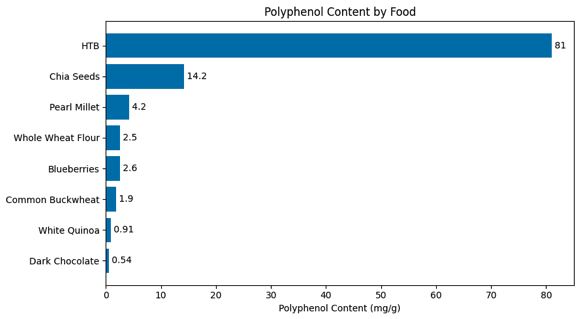
This rediscovery has helped clearly link immune health and longevity: the two are deeply interconnected. Immune health is not just about avoiding getting sick; emerging research shows that key nutrients—especially polyphenols and other bioactive compounds in the diet—can meaningfully shape immune resilience over time.
HTB Polyphenols and Immune Cell Aging
Immune cells are not static. Many immune cell populations turn over in a 90-day timeframe, meaning their function reflects the biological signals present during those renewal windows.
Why immune cell aging matters
As immune cells age, they can accumulate molecular “noise” that:
- Reduces communication efficiency
- Impairs adaptive responsiveness
- Drives chronic, low-grade inflammaging
Emerging research suggests that diet and specific polyphenol patterns can influence epigenetic marks and immune aging pathways.
The HTB Longevity Study: what was shown
In the HTB Longevity Study—a pilot clinical trial using a standardized Tartary buckwheat–derived polyphenol concentrate—50 adults consumed the concentrate daily for 90 days.
Key findings included:
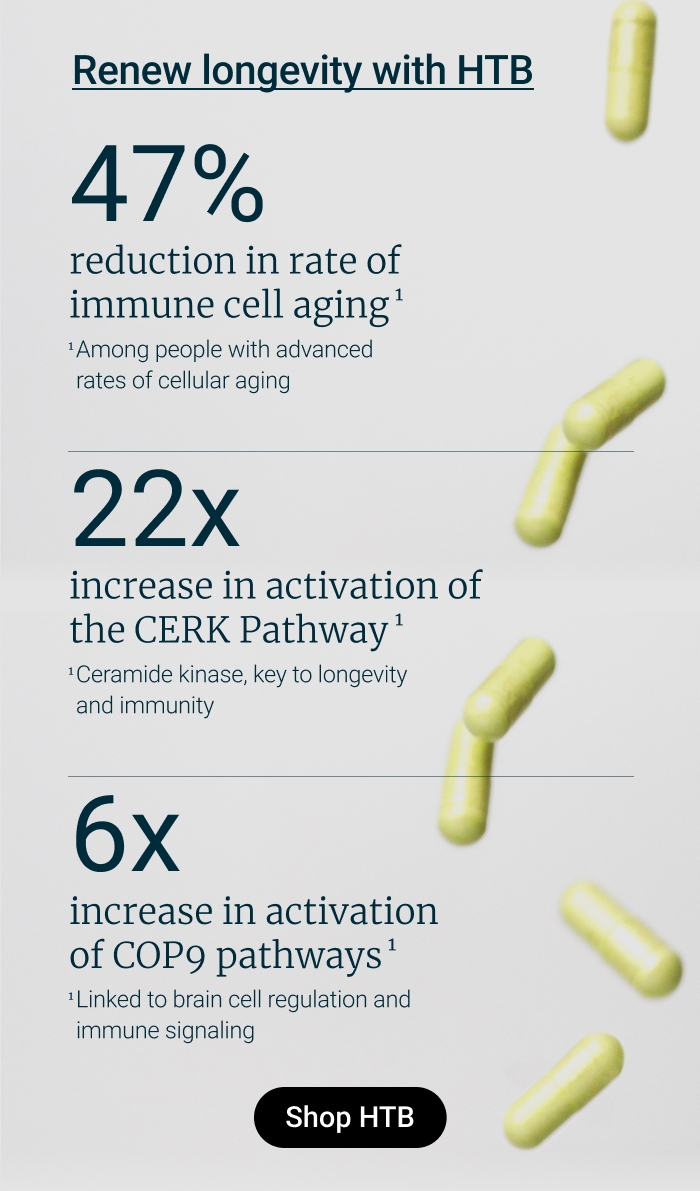
- 47% reduction in the rate of biological aging (PhenoAge) in participants who were aging more rapidly at baseline
- ~22x change in the ceramide kinase (CERK) pathway, a signaling pathway associated with immune aging and longevity
- >6x changes in pathways related to COP9, tied to brain cell regulation and immune signaling
These results show that:
- Immune-relevant aging markers can be influenced and shift in as little as 90 days
- A food-derived polyphenol profile can modulate gene pathways linked to immune and brain aging
Read the full HTB Longevity Study and its epigenetic findings.
Why Farming, Sourcing, and Processing Matter
Polyphenols are sensitive. Soil depletion, excessive heat, rough extraction, and long storage all erode the very compounds that make HTB so special.
Big Bold Health HTB Sourcing:
- Regenerative and organic farming, which supports soil health and polyphenol density
- Grown in the USA by smallholder farmers
- Non-GMO, heritage seed lines that preserve the traditional phytochemical profile
- Minimal, low-heat processing and controlled sprouting, designed to preserve and concentrate immune-active molecules rather than strip them away
When consumers see “Himalayan Tartary Buckwheat” on a label, the upstream choices in agriculture and processing largely determine whether they are getting the plant’s full biological complexity or a nutrient shadow of it.
Himalayan Tartary Buckwheat as Food-is-Medicine
Across diverse longevity traditions, certain dietary patterns keep reappearing:
- High intake of polyphenol-rich plant foods
- Diverse fibers that feed the microbiome
- Reliance on whole, minimally processed staples
Himalayan Tartary Buckwheat fits squarely into this pattern. It is not a trendy add-on; it is a nutritional cornerstone that harmonizes traditional food wisdom with modern immunology and epigenetic science.
Sprouting and formulation can enhance HTB’s impact, but the true power lies in the plant’s intrinsic chemistry—and in the integrity of how it is grown, harvested, and prepared. In a crowded wellness landscape, HTB earns attention not because it is fashionable, but because it can measurably influence immune renewal and biological aging in human beings.
Himalayan Tartary Buckwheat FAQs
Q: Is Himalayan Tartary Buckwheat gluten-free?
A: Yes. HTB is a pseudocereal and contains no gluten, making it suitable for gluten-free diets.
Q: Is Tartary buckwheat the same as regular buckwheat?
A: No. Tartary buckwheat is a different species with significantly higher levels of rutin and other polyphenols than common buckwheat.
Q: Why is Himalayan Tartary Buckwheat considered a longevity food?
A: Because it delivers dense polyphenol diversity, prebiotic fiber, and immune-supportive compounds in a whole-food form, and has been linked in clinical research to shifts in biological aging markers.
Q: Does sprouting Himalayan Tartary Buckwheat increase polyphenols?
A: Sprouting can increase certain immune-active polyphenols and enhance their bioavailability, boosting—but not creating—the plant’s inherent benefits.
Q: How long does it take to see immune-related effects?
A: Data from the HTB Longevity Study and immune cell turnover research suggest meaningful changes can emerge over 8–12 weeks, aligning with immune renewal cycles.
Q: Can Himalayan Tartary Buckwheat support gut health?
A: Yes. Its fibers and polyphenols interact directly with the gut microbiome, promoting beneficial strains, supporting barrier integrity, and influencing gut–brain–immune signaling.
Q: Why does sourcing matter so much for HTB?
A: Soil health, farming method, and processing conditions, all affect polyphenol levels and biological activity, meaning not all HTB products deliver exactly the same immune or longevity potential.